For Carrollton businesses
Commercial cleaning in Carrollton, TX
Facility type changes the work far more than square footage does. A dental practice, a distribution warehouse and a twelve-desk office of the same floor area are three completely different jobs — so we scope buildings rather than price them from a number.
How we work
Bonded and insured
Insurance covers accidental damage; the bond covers theft. A certificate is available on request.
Background-checked, vetted cleaners
Every cleaner is vetted and background checked before a first visit.
Professionally trained teams
Teams work to the Hygiene Maids method rather than a personal routine, so visits stay consistent.
Satisfaction guarantee
If an area is not right, tell us and we put it right.
24-hour re-clean policy
Report a missed area within 24 hours and we come back to redo it at no extra charge.
Carrollton is a working city, not a downtown
The commercial stock here is office suites and professional buildings, flex and warehouse space, storefronts, restaurants, clinics and community buildings — not towers.
That shapes how commercial cleaning actually gets delivered here. Most buildings are single-tenant or small-multi-tenant, which means you are the person who decides and you are also the person who notices when the restrooms are wrong. There is rarely a facilities department between us and the problem.
It also means schedules are yours to set. Very few of the buildings we clean run around the clock, so the work happens after you close or before you open, and the building is ready rather than being cleaned around people.
What we sell into that is consistency: a written scope, agreed before the first visit, worked to the same way every time, by teams who are vetted and background checked before they set foot in your building.
How a building gets scoped
Four steps, and none of them involve a price before somebody has seen the space.
- Step 1
You send the basics
Facility type, approximate area, how many restrooms, roughly how many people are in the building on a normal day, and the hours you would want the work done.
- Step 2
We walk the building
Floor types, restroom fixtures, breakroom setup, entrance glass, waste handling, security and access. This is where the real variables surface.
- Step 3
You get a written scope and a number
A document listing what is done every visit and what rotates weekly, monthly and quarterly — with the price for the frequency you want.
- Step 4
We clean to that document
The scope is the contract. When your needs change — a new tenant, a new area, more headcount — it is revised rather than quietly stretched.
What a commercial scope typically contains
Structured in tiers, because not everything sensibly happens at the same frequency.
Every visit
- Restrooms cleaned and disinfected, consumables restocked
- Breakroom counters, tables, sinks and appliance exteriors
- Entrance, reception and lobby
- Work areas, desks and shared surfaces
- Meeting and conference rooms reset
- High-touch points: switches, handles, handrails, buttons
- Trash collected, liners replaced, waste taken to the dumpster
- Floors vacuumed or mopped throughout
Weekly rotation
- Full vacuuming including under and behind furniture
- Detailed dusting of surfaces and fittings
- Interior glass, partitions and door glass
- Restroom partitions and tile walls
- Kitchen appliance fronts detailed
Monthly and quarterly
- Baseboards and cabinetry along their full length
- Vents, returns and reachable light fixtures
- Interior windows and sills
- Waste containers washed rather than relined
- Floor detail work and grout attention
- Refrigerator interiors, by arrangement
Tiers are set at the walkthrough, not assumed. A building with heavy public footfall may need weekly items done every visit; a quiet professional suite may not.
Facilities we clean
Each of these has its own page, because each one changes the priorities, the timing and the things that go wrong.
Most common
Office cleaning
Workstations, meeting rooms, reception, breakrooms and restrooms, cleaned after hours so the building is ready before anyone arrives.
Read more →
Schedules
Recurring commercial cleaning
How schedules are designed, what changes between one and five days a week, and how qualifying contracts reach the largest savings.
Read more →
Customer facing
Retail cleaning
Sales floors, entrance glass, fitting rooms and customer restrooms — where the cleaning is part of what the customer is buying.
Read more →
Customer facing
Restaurant cleaning
Dining rooms, front-of-house, restrooms and back-of-house floors, worked around service and around what the kitchen trades handle.
Read more →
Professional
Medical office cleaning
Waiting rooms, exam rooms, restrooms and high-touch surfaces in dental and medical practices, with clear limits on regulated work.
Read more →
Community
Church cleaning
Sanctuaries, fellowship halls, children’s areas and restrooms, on the Sunday-to-midweek rhythm these buildings actually run on.
Read more →
Community
School and childcare cleaning
Classrooms, shared spaces and restrooms for private schools, preschools, daycares and learning centers.
Read more →
Industrial
Warehouse cleaning
The office front, breakrooms and restrooms of industrial and flex buildings, plus the swept and mopped areas around them.
Read more →
Round the clock
Gas station cleaning
Convenience stores and forecourt sites that never close, where the restroom is the thing customers judge you on.
Read more →
Other spaces, handled without a page of their own
Some buildings do not need a specialist page because the scope is a straightforward variation on the ones above. We clean these regularly and they are quoted the same way.
- Property-managed common areas: lobbies, corridors, shared restrooms and elevator interiors in multi-tenant buildings.
- Salons, studios and small clinics, where the treatment area and the waiting area need different handling.
- Showrooms and trade counters, which behave like retail with more hard floor and more glass.
- Small manufacturing and light assembly office areas, where our work stops at the production floor.
- Community and event spaces booked irregularly, cleaned per booking rather than on a fixed schedule.
If your building is not obviously on either list, send the details anyway. It is a five-minute conversation and we would rather tell you honestly that something is not our trade than take it on badly.
What we do not take on
These are licensed or specialist trades. We will happily tell you what a building needs, but we will not pretend to be the people who do it.
- Carpet extraction, shampooing and hot-water restoration
- Floor stripping, sealing and refinishing
- Exterior window cleaning above ground level
- Kitchen exhaust hood and duct cleaning, and grease trap service
- Pressure washing and exterior facade work
- Regulated clinical, hazardous or biohazard cleaning
Before and after
A workspace, cleaned overnight
The point of an after-hours contract is that nobody sees the work — they see the building on Monday morning.
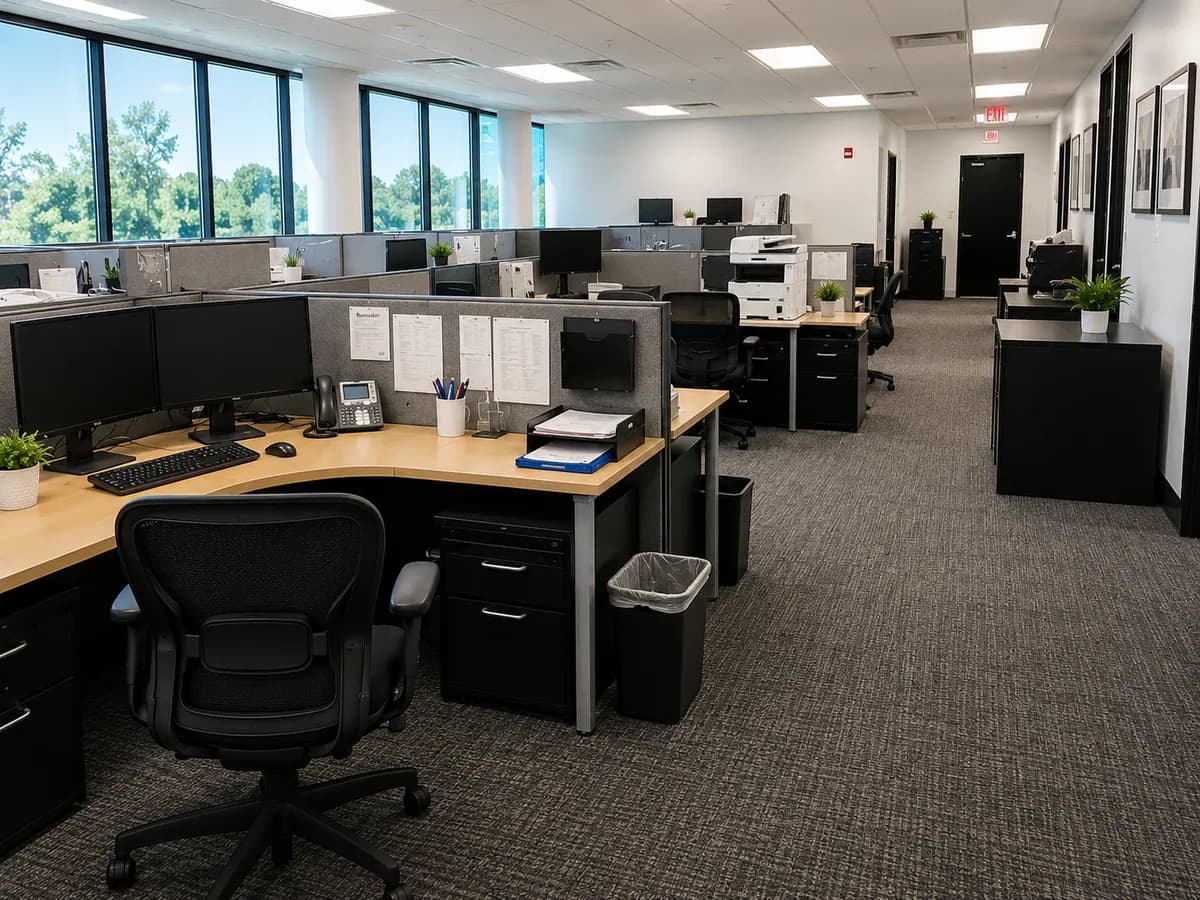
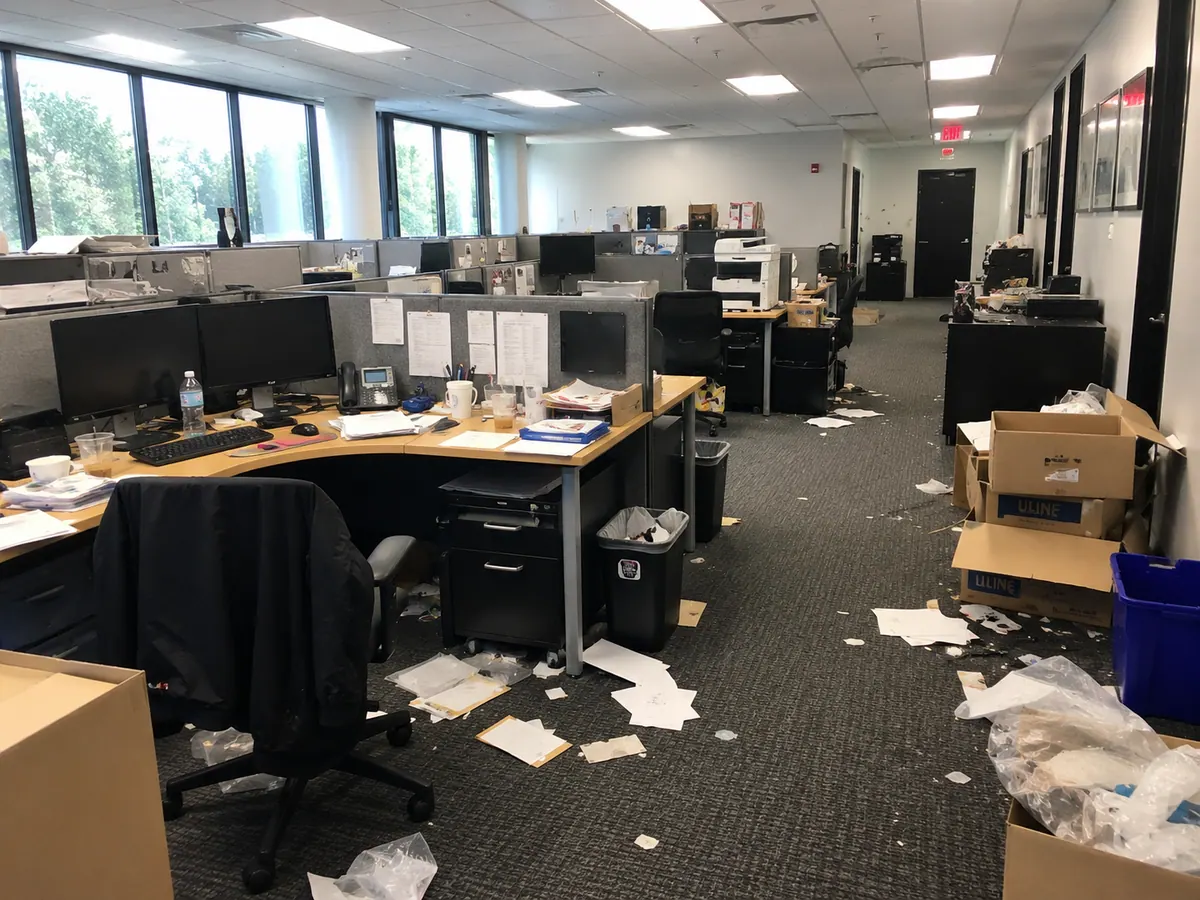
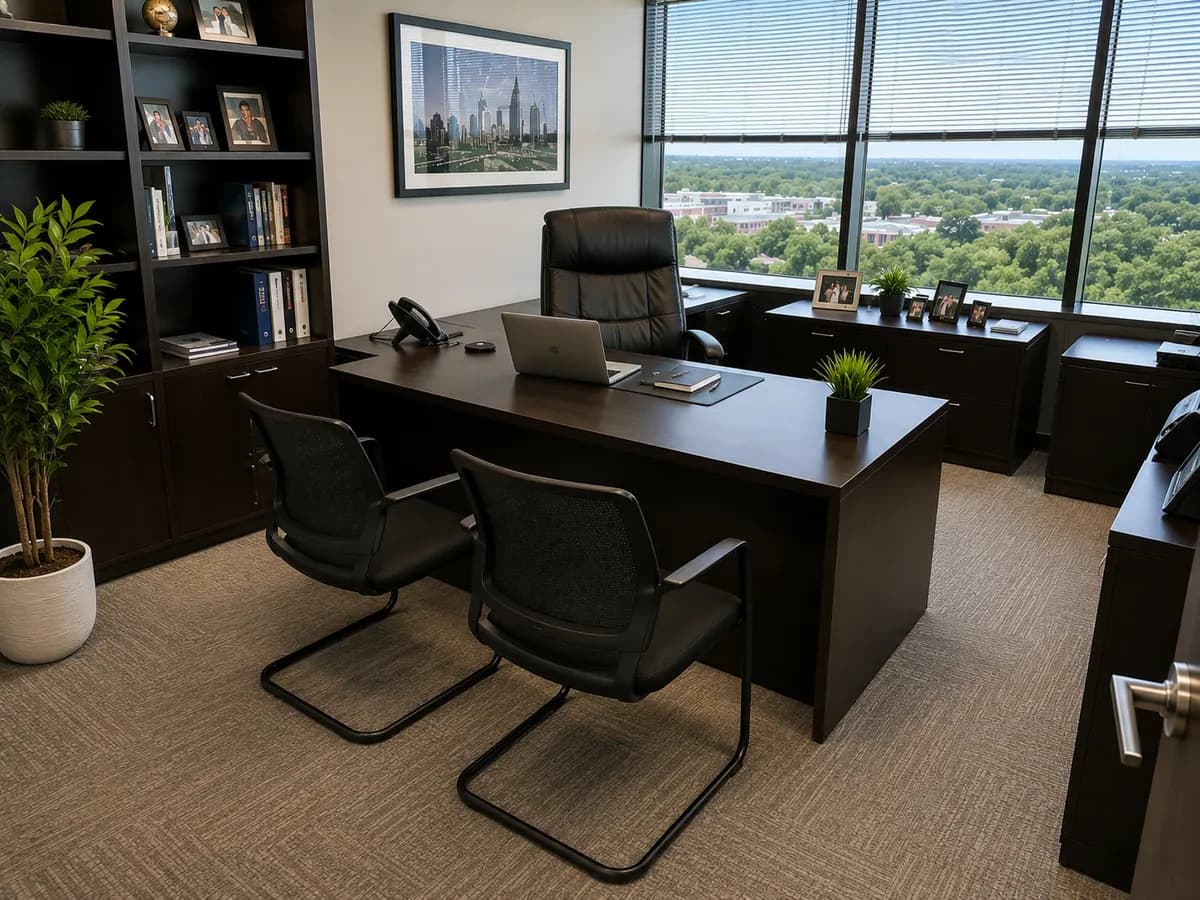
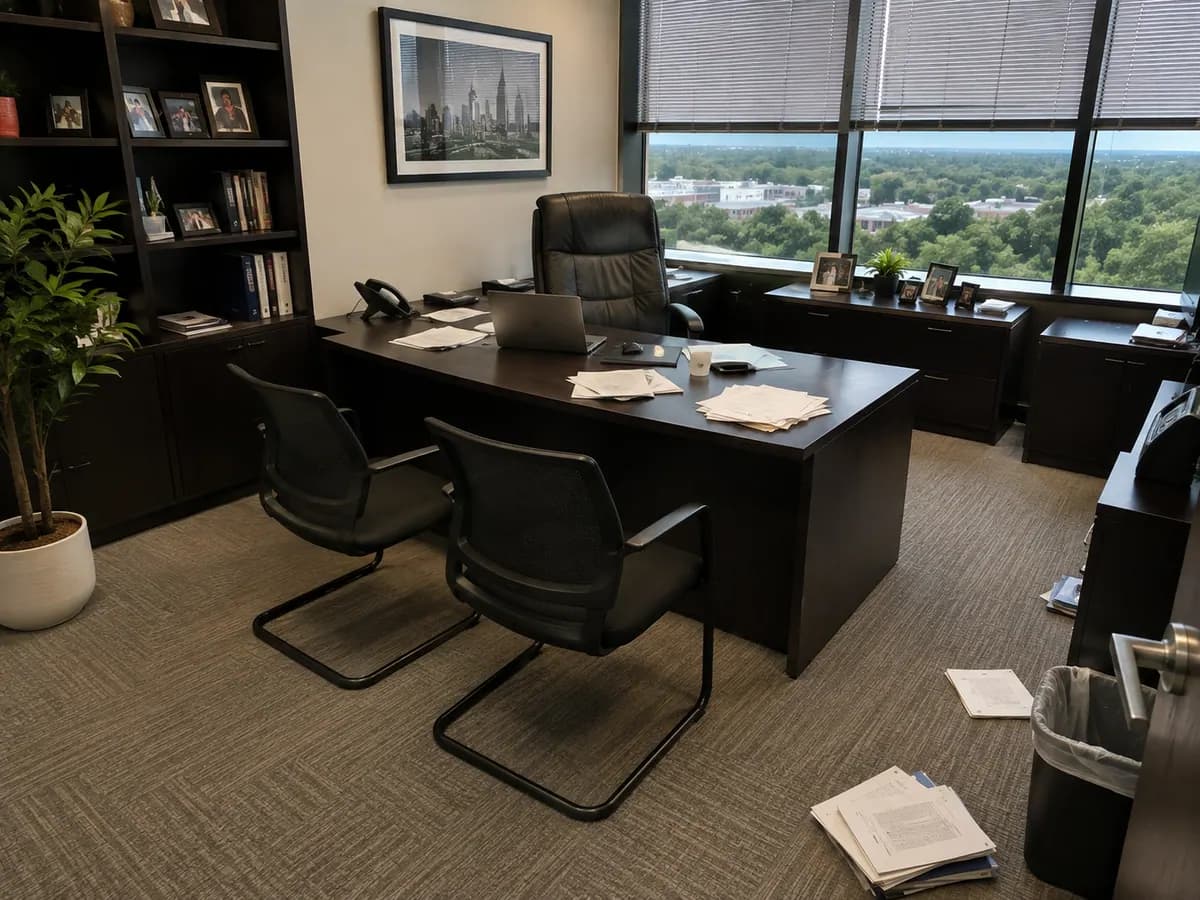
These are cleaning demonstration photographs made for Hygiene Maids of Carrollton, not documented customer jobs. They show what the work changes in a room, which is the part worth seeing.
What drives a commercial price
There is no per-square-foot figure that survives contact with a real building, which is why nobody serious quotes one over the phone.
- Facility type. A clinic and a warehouse of identical area are not comparable jobs.
- Restroom count and fixture count. The most reliable single predictor of labour on any commercial site.
- Frequency. Five nights a week costs more in total and dramatically less per visit than once a week.
- Headcount and footfall. Twelve staff and four hundred daily customers produce different amounts of work in the same building.
- Floor types and area. Hard floor, carpet, tile and polished concrete each need different handling.
- Access hours. Work that must happen inside a narrow window, or that requires alarm and key handling, is scheduled differently.
- Consumables. Whether we supply and manage paper, soap and liners, or you do.
A qualifying multi-day recurring contract can save up to 35%. Whether a specific building qualifies depends on the number of days and how the work is grouped, and it is settled at the quote rather than assumed.
Commercial cleaning questions
- Do you clean after hours?
By default, yes. Most commercial work happens after you close or before you open, so the building is ready rather than being cleaned around your staff and customers.
Daytime work is possible where a building needs it — some clinics and retailers prefer a visible presence during the day — and it is agreed at the scoping stage.
- Do you provide a certificate of insurance?
Yes. We are bonded and insured, and a certificate can be issued naming your entity or your property manager. Many buildings require one before a vendor can start; ask and we will get it filed.
- Who supplies paper, soap and liners?
Either. Some clients prefer to buy their own consumables and have us manage stock levels; others prefer we supply and invoice them. Decide at the walkthrough — it is a line in the scope, not an afterthought.
- Is there a minimum contract length?
Commercial work is set up as a recurring arrangement because that is what makes the schedule and the pricing work. Terms are agreed in the scope document rather than assumed, and you will see them before you sign anything.
- What happens if something is missed?
Tell us and we return to correct it. On a recurring commercial contract, a missed item is also a scope conversation — a recurring miss usually means the scope or the frequency is wrong rather than that a night went badly.
- Can you clean one building and quote several?
Yes. If you manage more than one site, they can be scoped individually and run under one arrangement. Multiple sites often change what qualifies for the larger recurring savings.
Before you request a quote
- What affects the cost of commercial cleaningThe seven variables, and how to gather them before you ask anyone for a number.
- Office cleaning vs janitorial serviceTwo words used interchangeably that describe genuinely different arrangements.
- How to choose an office cleaning companyThe questions worth asking, including the ones that expose a bad fit early.
- How to create an office cleaning scheduleBuilding a tiered scope yourself, whoever ends up delivering it.
Next step
Get your building scoped
Send the facility type, rough area, restroom count and the hours you want the work done. We will arrange a walkthrough and come back with a written scope and a price.
Book online in a few minutes, or call (972) 440-4421 — texting works too, if that’s easier.