
Households
Cleaning tips for homes with pets
Pet households are not dirtier. They have a different problem: hair and dander redistribute constantly, and odour comes from somewhere specific rather than everywhere.
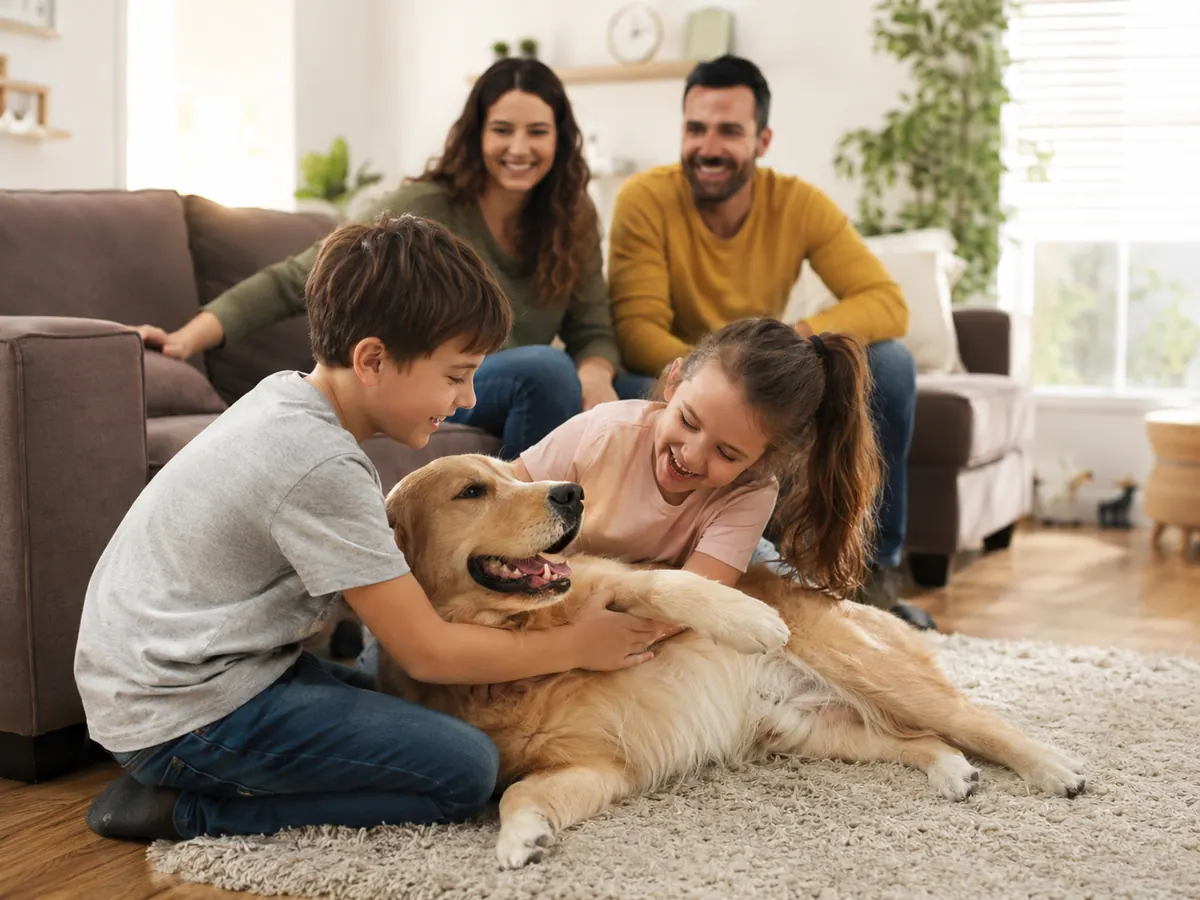
Hair moves; it does not settle
The reason a pet household never feels finished is that pet hair does not behave like dust. Dust falls and stays. Hair circulates.
Every time somebody walks across a room, sits on a sofa or opens a door, hair that was on the floor becomes hair in the air and then hair somewhere else. Which is why you can vacuum a room properly and find hair in it two hours later, and conclude the vacuuming failed. It did not.
The practical consequence is that in a pet home, frequency does more than thoroughness. A quick pass over the main floor areas three times a week removes far more total hair than one very thorough session weekly, because you are catching it before it redistributes.
This is also the main reason pet households end up on weekly rather than biweekly professional cleaning. It is not that the house gets dirtier — it is that the interval is what determines how much hair is in circulation.
What works, by surface
Different surfaces hold hair differently and want different tools.
- Hard floors: a vacuum, not a broom. Sweeping lifts hair into the air, where it lands somewhere else. A vacuum with good suction and a sealed path captures it instead.
- Carpet and rugs: a vacuum with a beater bar, worked slowly in two directions. Hair works down into carpet pile and one fast pass over the top misses most of it.
- Upholstery: a rubber-edged tool or a damp rubber glove beats any brush attachment. Rubber generates static that lifts embedded hair; brushes push it deeper.
- Bedding and throws: a short tumble-dry on air-only before washing. It strips most of the hair into the lint trap rather than into your washing machine.
- Baseboards and corners: a crevice tool. Hair gathers along the base of walls because air currents put it there, and a floor head cannot reach it.
- Air: change HVAC filters more often than the packet says. Pet dander loads them faster and a loaded filter stops helping.
Odour comes from a place, not a house
The single most common mistake in a pet household is treating odour as an ambient problem. Air fresheners, plug-ins and scented sprays mask it for a few hours and address nothing.
Pet odour is almost always coming from a specific source, and it is usually one of a short list.
- Bedding — the pet's own bed, blankets and the spot on the sofa. Wash them, hot, more often than feels necessary.
- The area around food and water bowls, including the floor underneath and behind them.
- Litter trays and the immediate surrounding floor, including the wall behind.
- Soft furnishings a pet sleeps on regularly — the same cushion every day builds up.
- Carpet in a specific area, usually where an accident happened once and was cleaned from the surface only.
- The HVAC filter and returns, which recirculate whatever is in the air.
Deal with the source and the ambient smell disappears without any fragrance at all. If it does not, the source is one you have not found — and for carpet that usually means the padding underneath, which needs extraction from a specialist rather than surface cleaning.
Telling us about your pets
Before a first visit, we want to know what lives there, whether anything needs a door kept closed, whether a dog is comfortable with strangers arriving, and whether a cat must not be let outside. It goes on your account and carries forward. Nobody minds pets — they are in most of the homes we clean — but a team that walks in unprepared is a bad start for everyone including the animal.
A realistic between-visits routine
For a household with a shedding dog. Adjust down for a cat or a low-shed breed.
Two or three times a week
- Vacuum the main traffic areas only
- Shake out or vacuum the pet bed
- Wipe the floor around food and water bowls
- A quick pass over the sofa with a rubber tool
Weekly
- Wash pet bedding and blankets
- Vacuum upholstery properly, including under cushions
- Clean the litter tray area including the wall behind
- Wipe door frames and low walls at nose height
Monthly
- Check and change the HVAC filter
- Vacuum baseboards with a crevice tool
- Wash or replace any washable furniture covers
- Move furniture and vacuum underneath
Pet household questions
- Do you charge extra for pets?
Not as a pet fee. Shedding does add work, and that shows up through the condition and frequency questions rather than as a separate charge.
- What products do you use around animals?
Standard cleaning products used as directed and surfaces left dry. If you prefer particular products used in your home, leave them out and tell us and we will use yours instead.
- Can you clean if my dog is home alone?
Usually, if the dog is comfortable with people arriving. Tell us what to expect — a crate, a closed room, or a dog who will simply follow the team around. If an animal is genuinely reactive to strangers, it is better to arrange for them to be elsewhere.
- Will you clean litter trays?
Cleaning the floor and surfaces around a litter area is part of a visit. Emptying and refilling a tray is not — it is a task better done by whoever knows the animal and its routine.
- How do I get rid of pet smell in carpet?
If surface cleaning has not worked, the odour is in the padding underneath and needs extraction from a carpet specialist. That is a different trade with different equipment, and it is the honest answer rather than a stronger product.
Next step
Book a clean
Tell us about your animals in the booking notes and it carries forward to every visit.
Book online in a few minutes, or call (972) 440-4421 — texting works too, if that’s easier.